Life has a habit of becoming expensive at the worst possible time. Your car breaks down just before payday. The geyser suddenly needs replacing. Your child needs an unexpected medical appointment. Your employer cuts overtime, or you find yourself without work for several weeks.
These situations are difficult enough without also having to figure out where the money will come from.
That is exactly what an emergency fund is designed for.
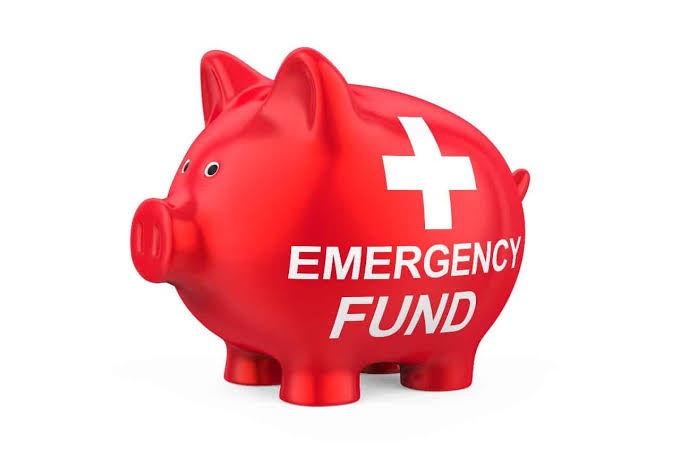
An emergency fund is money that you deliberately put aside for unexpected and necessary expenses. It isn’t money for December shopping, a new phone, a holiday or something you’ve been planning to buy. It is a financial safety net that you can reach for when something genuinely goes wrong.
For South Africans dealing with rising household expenses, debt repayments and unpredictable income, building a large emergency fund may sound unrealistic. The important thing to understand is that you don’t have to save R30,000 overnight.
You can start with R100.
What matters is getting started and gradually building a financial buffer that belongs to you.
What Is an Emergency Fund?
An emergency fund is a separate amount of money reserved for genuine financial emergencies.
Think of it as a barrier between an unexpected expense and debt.
Imagine your car needs an urgent R3,000 repair and you need the vehicle to get to work. Without savings, you might have to use a credit card, borrow from family, take a short-term loan or wait until payday.
If you already have R5,000 sitting in an emergency account, you can pay for the repair and then concentrate on rebuilding your savings.
That is the purpose of an emergency fund.
It won’t prevent emergencies from happening, but it can make them far less financially damaging.
Why Is an Emergency Fund Important in South Africa?
Many households operate on relatively tight monthly budgets. Once rent or a bond, groceries, electricity, transport, insurance, school expenses and debt repayments have been paid, there may not be much money left.
An unexpected R2,000 expense can therefore become a serious problem.
Without savings, one emergency can also create another problem: new debt.
For example, suppose you borrow R5,000 to deal with an emergency. You now have to repay that R5,000 plus whatever interest and fees apply. Those repayments reduce the amount available in your future monthly budgets.
Another emergency could arrive before you’ve finished paying for the first one.
An emergency fund helps break this cycle.
How Much Should You Have in an Emergency Fund?
There isn’t one amount that’s right for every South African household.
A commonly used long-term target is approximately three to six months of essential living expenses.
The important word here is essential.
You don’t necessarily need enough money to maintain every part of your normal lifestyle for six months. You are calculating how much you’d need to keep your household functioning.
Essential expenses could include:
- Rent or bond payments
- Basic groceries
- Electricity and water
- Transport to work
- Medical expenses or medical aid
- Insurance
- Essential school expenses
- Minimum debt repayments
- Phone/data required for work
Suppose your normal household spending is R20,000 per month, but only R13,000 of that is essential.
Your emergency-fund targets could look like this:
| Target | Emergency Savings |
|---|---|
| 1 month | R13,000 |
| 3 months | R39,000 |
| 6 months | R78,000 |
Seeing R78,000 may immediately make you think, There’s no way I can save that.
Don’t make R78,000 your first target.
Make R1,000 your first target.
Then R2,500.
Then R5,000.
Building an emergency fund is a process, not a once-off transaction.
Start With a Small Emergency Fund
If you’re starting from zero, trying to save six months’ expenses immediately can be discouraging.
Create milestones instead.
A practical progression might be:
R1,000 → R2,500 → R5,000 → R10,000 → one month’s essential expenses → three months → six months.
Your first R1,000 might not cover a major emergency, but it could pay for an unexpected doctor’s visit, small household repair, transport problem or other expense without borrowing.
That is already progress.
Step 1: Work Out Your Essential Monthly Expenses
Before deciding how much to save, find out how much your household actually needs.
Go through your bank statements for the last two or three months.
Write down your essential expenses.
For example:
| Expense | Monthly Amount |
|---|---|
| Rent | R6,000 |
| Groceries | R3,500 |
| Electricity/water | R1,500 |
| Transport | R2,000 |
| Insurance | R800 |
| Phone/data | R500 |
| Essential debt payments | R1,700 |
| Total | R16,000 |
In this example, one month of essential expenses is approximately R16,000.
A three-month emergency fund would therefore be around R48,000.
You don’t need R48,000 before your emergency fund becomes useful. Every rand accumulated before reaching that target still improves your financial position.
Step 2: Decide on Your First Target
Instead of focusing immediately on three or six months of expenses, choose an achievable short-term goal.
For example:
“I’m going to build my emergency fund to R5,000.”
Once you reach R5,000, increase the target to R10,000.
Breaking a large financial goal into smaller milestones makes progress easier to see.
If you earn an irregular income, are self-employed or work in an industry where income can fluctuate significantly, you may eventually prefer a larger buffer.
Someone with highly stable employment and two incomes in the household may be comfortable with a smaller fund than a household dependent on one unpredictable income.
Step 3: Keep Your Emergency Money Separate
One of the easiest ways to accidentally spend emergency savings is keeping them in the same account you use every day.
Your banking app says you have R4,800 available, and psychologically it can feel like money you’re free to spend.
Consider opening a separate savings account.
Ideally, emergency money should be:
Safe, reasonably accessible and separate from everyday spending.
You don’t necessarily want emergency savings locked away somewhere that makes accessing the money extremely difficult. If your car breaks down tomorrow, the purpose of the fund is to be available.
At the same time, it shouldn’t be so easy to access that you’re constantly dipping into it for takeaways and entertainment.
South Africa now also has an explicit deposit-insurance system. The South African Reserve Bank’s Corporation for Deposit Insurance (CODI) protects qualifying depositors for up to R100,000 per depositor per registered bank in qualifying accounts if a bank fails. This includes qualifying savings and transactional accounts. (Reserve Bank of South Africa)
You can read more directly from the South African Reserve Bank’s CODI information.
Importantly, CODI’s protection doesn’t mean every investment product is protected. Products such as shares and unit trusts aren’t covered by CODI in the same way as qualifying bank deposits. (Reserve Bank of South Africa)
Step 4: Automate Your Savings
Saving whatever happens to be left at the end of the month often doesn’t work.
There is frequently nothing left.
Instead, treat emergency savings as one of your monthly expenses.
If you get paid on the 25th, for example, arrange an automatic transfer into your emergency account shortly after payday.
It doesn’t have to be a huge amount.
Consider what happens if you consistently save:
| Monthly Saving | After 6 Months | After 12 Months |
|---|---|---|
| R200 | R1,200 | R2,400 |
| R500 | R3,000 | R6,000 |
| R750 | R4,500 | R9,000 |
| R1,000 | R6,000 | R12,000 |
| R1,500 | R9,000 | R18,000 |
| R2,000 | R12,000 | R24,000 |
These figures exclude interest, but they illustrate something important: consistency matters.
R500 may not feel significant when you transfer it, but doing it every month gives you R6,000 after a year.
Step 5: Find Money Without Destroying Your Lifestyle
“Just stop spending money” isn’t particularly useful financial advice.
Most people still want to enjoy their lives.
Instead, examine where money is disappearing without providing much value.
Look through your last 30 days of transactions.
You might find:
- Subscriptions you barely use
- Frequent takeaway orders
- Unnecessary banking fees
- Small impulse purchases
- Excessive delivery fees
- Multiple streaming subscriptions
- Expensive mobile-data habits
- Purchases made simply because they were on sale
You don’t have to remove everything enjoyable.
Suppose you identify R700 per month in expenses you genuinely don’t care about. Redirect that R700 into your emergency fund.
After 12 months, that’s R8,400 before interest.
Step 6: Use Unexpected Money to Speed Things Up
Not every rand added to your emergency fund needs to come from your salary.
You may occasionally receive:
- A work bonus
- Tax refund
- Commission
- Overtime
- Birthday money
- Money from selling something you no longer use
- Side-hustle income
You don’t necessarily have to save all of it.
One approach is to create your own rule.
For example:
50% for your emergency fund and 50% for yourself or other financial goals.
If you receive an unexpected R4,000, R2,000 immediately strengthens your safety net while you still get to use the remaining R2,000 elsewhere.
What Actually Counts as an Emergency?
This is where many emergency funds go wrong.
A sale at your favourite clothing shop isn’t an emergency.
Neither is wanting a newer television.
A genuine emergency is generally unexpected, necessary and financially urgent.
Reasonable examples include an urgent car repair when you depend on the vehicle for work, emergency medical costs, essential home repairs, unexpected loss of income or urgent travel because of a family emergency.
Before withdrawing money, ask yourself three questions:
Was this unexpected?
Is it necessary?
Do I need to deal with it now?
If the answer is yes to all three, using your emergency fund may be appropriate.
Expected Expenses Are Not Emergencies
Christmas happens every December.
Vehicle licence renewals happen regularly.
School uniforms and birthdays aren’t unexpected either.
These expenses should ideally have their own savings categories.
For example, if December normally costs your household an extra R6,000, saving R500 per month throughout the year gives you R6,000 by December.
That prevents a predictable expense from draining your emergency fund.
This type of money is sometimes called a sinking fund.
You could have separate savings pots for:
Car maintenance, school expenses, December spending, annual insurance, home maintenance and holidays.
Your emergency fund then remains available for genuinely unexpected events.
Should You Save or Pay Off Debt First?
This is one of the more difficult questions because the answer depends on your situation.
High-interest debt can be expensive, so paying it down can be financially important. But putting every available rand into debt while maintaining zero emergency savings can leave you vulnerable.
If an emergency happens, you may simply borrow again.
A balanced approach can make more sense.
For example, you might first build a small emergency buffer of R2,000–R5,000 while continuing your required debt payments. Once you’ve established that buffer, you could direct more money toward expensive debt.
After reducing the debt, you can accelerate your emergency savings.
Your circumstances, interest rates and debt obligations matter, so there isn’t one formula appropriate for everybody.
What If You Can Only Save R50 or R100?
Save it.
Don’t allow a small starting amount to convince you that saving is pointless.
R100 per month is better than R0.
More importantly, you’re developing the habit of putting money aside.
If your income improves later, you can increase the amount.
You could move from:
R100 → R250 → R500 → R750 per month.
Your savings plan should change as your financial circumstances change.
What If Your Income Changes Every Month?
Freelancers, commission earners, small-business owners and casual workers may find fixed monthly savings difficult.
Instead of saving a fixed rand amount, consider saving a percentage of every payment you receive.
For example, you could decide:
“Every time I receive income, 5% goes into my emergency fund.”
If you receive R10,000, you save R500.
If you receive R4,000, you save R200.
During stronger months, you automatically save more.
People with irregular income may also benefit particularly from eventually building a larger emergency fund because a drop in income itself can be one of their biggest financial risks.
Should You Invest Your Emergency Fund?
Your emergency fund and your long-term investments serve different purposes.
Investments are generally intended to build wealth over time. Emergency savings need to be available when something goes wrong.
That means chasing the highest possible investment return isn’t necessarily the priority.
Imagine investing your entire emergency fund in an asset that can fluctuate significantly. You need R15,000 urgently, but the investment happens to be down 20% when you need to sell.
That’s exactly the type of situation an emergency fund is supposed to prevent.
Liquidity and capital preservation generally matter more than aggressive growth for emergency money.
It’s also worth understanding the distinction between bank deposits and investments. CODI covers qualifying deposits up to R100,000 per qualifying depositor per registered bank, but products such as unit trusts and shares aren’t covered as qualifying deposits. (Reserve Bank of South Africa)
What Happens After You Use Your Emergency Fund?
Using your emergency fund for a genuine emergency isn’t failure.
That’s why you built it.
If you had R15,000 and an emergency required R6,000, you’d have R9,000 remaining.
Once the immediate situation has passed, make rebuilding the missing R6,000 a priority.
You might temporarily reduce discretionary spending or redirect extra income until your fund returns to its previous level.
Think of it like refilling a fire extinguisher after you’ve needed to use it.
Don’t Compare Your Emergency Fund With Someone Else’s
One person may need R20,000.
Another household may need R100,000.
Someone living with family and having very few financial responsibilities is in a different situation from a parent supporting children, paying a bond and maintaining two vehicles.
Your emergency fund should reflect your expenses, dependants, job security and financial risks.
The goal isn’t to have the biggest savings balance on social media.
The goal is to make your own household more resilient.
A Simple 12-Month Emergency Fund Challenge
If you’re struggling to start, try increasing your contribution gradually.
For example:
| Months | Monthly Contribution |
|---|---|
| 1–3 | R250 |
| 4–6 | R500 |
| 7–9 | R750 |
| 10–12 | R1,000 |
By the end of the year, you’d have contributed R7,500, excluding any interest.
You can adapt those numbers to your income. Someone may start at R50; someone else may start at R2,000.
The amount isn’t the important part of the exercise.
Building the habit is.
Frequently Asked Questions
How much emergency savings should I have in South Africa?
There is no legally required or universally correct amount. A commonly used longer-term goal is enough to cover roughly three to six months of essential expenses, but even a much smaller emergency buffer can be valuable.
Is R10,000 a good emergency fund?
It depends on your expenses. R10,000 could be a very useful first milestone even if it isn’t enough to cover several months of living costs.
Where should I keep emergency savings?
Consider an account that keeps the money separate from everyday spending while allowing reasonably quick access when needed. Compare interest rates, fees, withdrawal restrictions and access times before choosing an account. If using a South African bank, you can also check whether the particular deposit qualifies for CODI protection. All banks registered in South Africa are members of CODI, including commercial, mutual and co-operative banks and local branches of foreign banks. (Reserve Bank of South Africa)
Should I keep emergency money in cash at home?
Keeping a small amount of physical cash for short disruptions can be useful for some households, but keeping your entire emergency fund at home introduces risks such as theft, loss and fire. A suitable bank savings account will generally provide better security for the bulk of the fund.
Can I use my emergency fund when I’m unemployed?
Loss of income is one of the main reasons people build emergency funds. The money can help cover essential living expenses while you look for another source of income.
Final Thoughts
Building an emergency fund isn’t about becoming wealthy overnight. It’s about creating breathing room.
Your first goal doesn’t need to be R50,000.
Start with R500 if that’s realistic. Then reach R1,000. Work toward R2,500, R5,000 and eventually one month of essential expenses.
The most important step is starting.
Once you have money set aside, an unexpected bill doesn’t automatically have to become a credit-card balance, payday loan or desperate call to a family member.
And that is the real value of emergency savings: you are buying yourself options when life doesn’t go according to plan.
For further reading on how South African bank deposits are protected, visit the South African Reserve Bank – Deposit Insurance and CODI Frequently Asked Questions.
Disclaimer: This article provides general educational information and should not be considered personalised financial advice. Consider your individual financial circumstances and, where necessary, consult an appropriately qualified financial professional.